
Case study · Machinery & Production Lines
Integrated Honey Filling & Packaging Systems
Two packaging systems sourced and coordinated for an Australian honey business — from automated jar filling, capping and labelling to single-serve sachet packing.
- Client
- Australian Honey Ventures / BeeWell
- Sector
- Food Processing & Packaging
- Project Type
- Custom Packaging Machinery
- Systems
- Jar Packing + Sachet Packing
- Process
- Fill · Cap · Label · Code · Pack
- Status
- Historical Project
01 / Project Overview
Packaging formats shaped the machinery brief.
Australian Honey Ventures required more than packaging materials. As the BeeWell product range developed, the business also needed equipment to turn bulk honey into finished retail products.
TL Enterprises coordinated the sourcing and configuration of two different packaging systems: a jar packing line covering filling, capping, labelling and date coding, and a separate packing solution for single-serve honey sachets.
Because TL was also involved in sourcing the client’s jars, closures, labels and flexible packaging, the machinery brief could be coordinated around the actual packaging formats rather than treated as a standalone equipment purchase.
02 / The Brief
The Requirement
The project needed to accommodate two very different retail formats.
For the jar range, the objective was to create a connected process from filling through to the finished labelled product. The equipment needed to work around the client’s container, closure and label formats while integrating the individual stages into a practical production flow.
Single-serve honey required a different packaging approach, with dedicated equipment suitable for portioned flexible packaging.
TL worked with manufacturers to translate these packaging requirements into appropriate machine configurations and production-line arrangements.
03 / System One
Jar Filling & Packing Line
- 01Jar Infeed
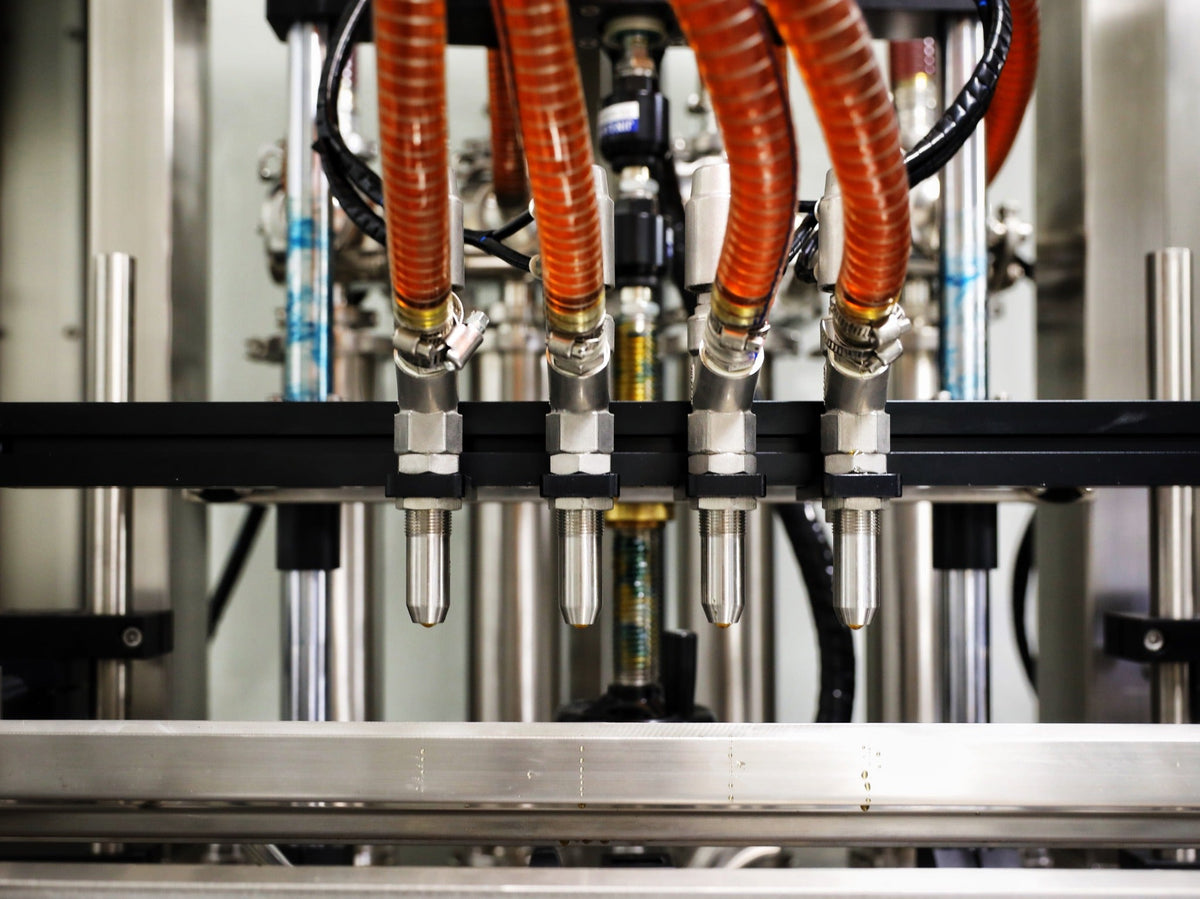
- 02Honey Filling
- 03Capping
- 04Labelling
- 05Date Coding
- 06Finished Product
The primary line was configured around the client’s retail honey jars, bringing several individual packaging stages into one coordinated process.
Rather than sourcing each machine in isolation, TL worked across the line requirements so that filling, closures, labels, coding and product movement could operate as part of the same packing workflow.

Filling
Honey filling equipment configured around the client’s retail packaging format.
Capping
Closure application integrated into the production sequence.
Labelling
Label application coordinated around the approved label and container format.
Date Coding
Production information applied as part of the finished packaging process.
Line Integration
Individual machine stages coordinated into a practical production workflow.
Equipment Detail
Labelling around the approved packaging
The existing project photographs show the label path, application equipment and sensor within the jar packing line.


04 / System Two
Single-Serve Sachet Packing
The BeeWell range also included single-serve honey sachets, creating a second and very different machinery requirement.
TL sourced and coordinated packing equipment for portioned flexible packaging, allowing honey to be packed into individual sachets rather than rigid containers.
This meant the overall machinery project was not based around one standard packing format. Different equipment solutions were selected around the way each product was intended to be filled, packed and presented.
05 / Integrated Sourcing
Packaging and Machinery Had to Work Together
Packaging machinery cannot be considered separately from the packaging it is expected to run.
Container dimensions, closures, label formats, flexible packaging and the sequence of production all influence equipment selection and configuration.
Because TL was coordinating both packaging procurement and machinery sourcing for the client, these requirements could be considered together rather than managed as separate purchasing exercises.


06 / TL’s Role
Our Role
Requirement Definition
Turning the client’s packaging process into a machinery brief.
Supplier & Equipment Sourcing
Identifying manufacturers capable of supplying the required packing equipment.
Line Configuration
Coordinating individual machine stages around the intended production workflow.
Packaging Compatibility
Considering containers, closures, labels and flexible packaging alongside the machinery.
Production Follow-Up
Following equipment manufacture, configuration and project requirements with suppliers.
Shipping Coordination
Preparing completed equipment for international supply and delivery.
07 / Supplier Coordination
Production Coordination
The project required ongoing coordination with equipment manufacturers rather than a simple machine purchase.
TL followed production around the agreed configuration and packaging requirements, helping resolve equipment and packaging interface questions before shipment.
- Machine configuration
- Packaging compatibility
- Label handling
- Production follow-up
- Delivery preparation
08 / The Result
Outcome
The completed project gave the client packaging equipment across two distinct product formats — retail jars and single-serve sachets — supported by TL’s wider packaging sourcing capability.
More importantly, the project demonstrated how packaging materials and production equipment can be sourced as one coordinated system rather than as disconnected purchases.
09 / Project Capability
What This Project Demonstrates
Integrated Packing Lines
Multiple stages coordinated into one production process.
Multiple Packaging Formats
Rigid containers and flexible single-serve packaging required different equipment solutions.
Packaging + Machinery
Equipment sourced around the packaging it needed to run.
Custom Equipment Sourcing
Machinery selected around the client’s actual production requirements.
End-to-End Coordination
From requirement definition and supplier sourcing through production follow-up and delivery preparation.